
he devastation of Hurricane Helene transformed the mountains of Western North Carolina into rivers of earth and undid the fabric of place at cataclysmic magnitude. But the resilience that grew from the torn earth took numerous forms in the weeks and months afterwards and connected people and place across time. Shaped by the storm, Spell of Leaves began writing and playing music that directly engaged with home: The people and history, and out of a deluge of sound and time comes the first single, “Old Fort Loops” from the band’s forthcoming debut EP Where You Come From.
A year in the short time, a decade-plus in a kind of deep time, Spell of Leaves has been making music along Banner Elk’s Shawneehaw Creek since it flooded in fall of 2024. Singer, multi-instrumentalist, and song-writer Trevor Brown has been making music against the backdrop of the same rhododendron hell for over three decades.
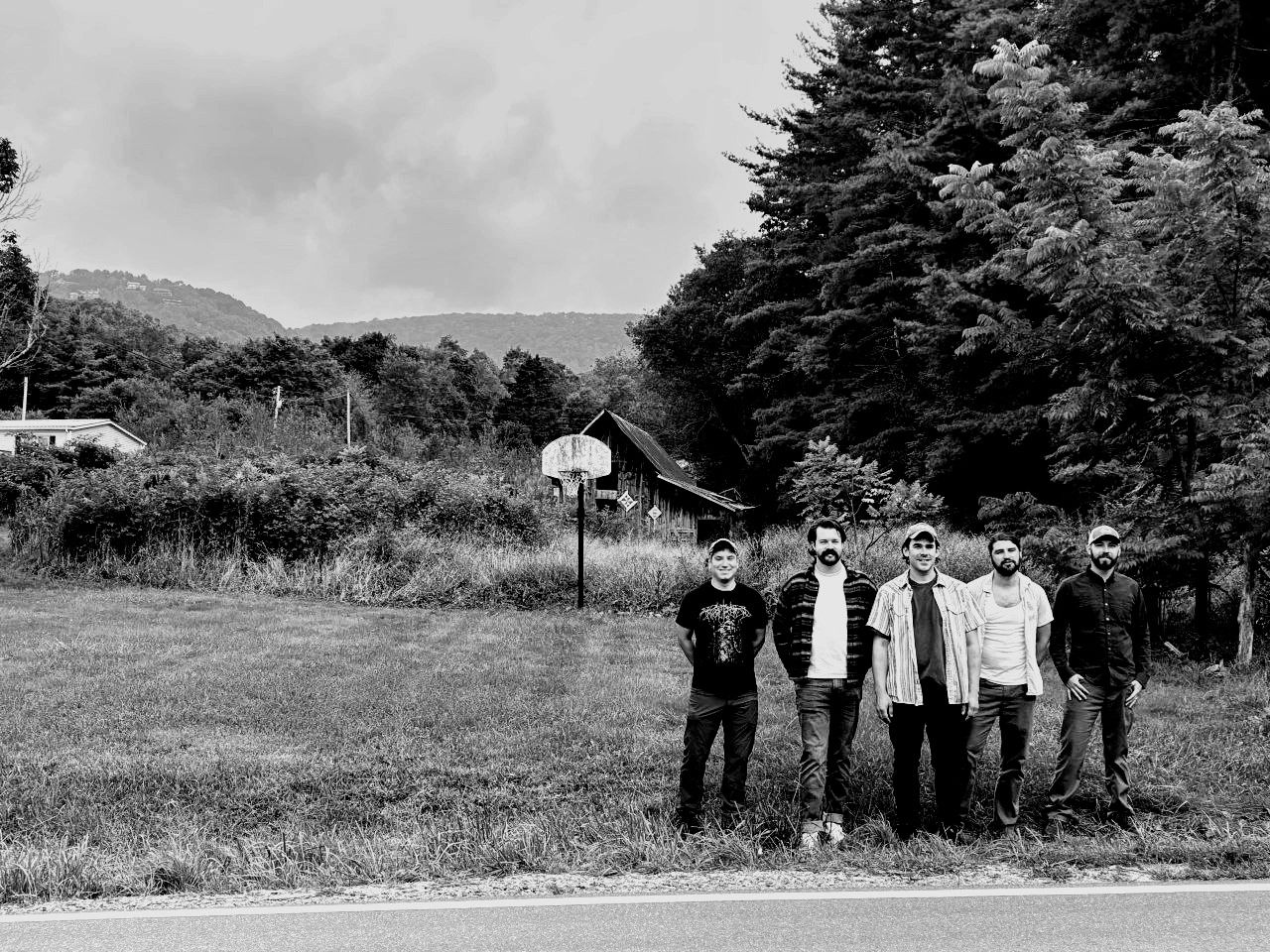
Out of the miasma of a psychic and lived geography emerges the whorling and dreamlike “Old Fort Loops,” first conceived by the band’s bass player, Scott Huffard, who holds a PhD in History, and who began sketching the song for claw-hammer banjo. Collaboratively, the lyrics grew out of this sketch, with Matthew Wimberley, an LSU Press Southern Messenger Poet building connective tissue, and finally Trevor Brown taming the song’s grade while navigating tension of time traveling between catastrophe.
Old Fort Loop’s lyrics charge along to thick bass riffs and swirling organs which collide and emerge like a train through a tunnel to the past. Lyrically the song encompasses layers of tragedy along the Western North Carolina Railroad, which linked Asheville to the rest of the state and opened the doors to tourism and rapid growth. While the first verses include subtle callbacks to the old folk song, “Swannanoa Tunnel” and echos reminders of the heavy human cost of building this line, the rest of the song draws a thread between the destruction of Helene and a long history of flood disasters that imperiled workers and wiped out the rail line. By the time the guitars and organ drop out and rumbling drums remain to invoke the storm, even if not even clear we’re in 1916, 1940, or 2024.
The song finds a harmonic resonance with themes of labor, beauty, and place, while casting an eye on the forces that work to undo the people of this place; those forgotten and overlooked—those most vulnerable to climate disasters. It’s an old story made new in the world after Helene, “The land of the sky is only half the truth” Brown sings in the chorus, inverts an old promotional slogan, unveiling the realities of beauty not divorced of human cost, but left standing at the altar ready to make some profane vow.
The song marries a modern indie sensibility with the southern gothic leanings of early R.E.M. It combines the wanderlust and expansive Americana of Magnolia Electric with a sense of place culled from the deep folkways of southern Appalachia.
The song rises and collapses through lightning burst guitar riffs and dam breaking drum builds; part dirt road at twilight and part two lane straight away into the valley, the song lets loose, giving way to a kind of bright grit that’s cut through by Brown’s plangent cry at the height of the song which catches a breath as if someone witnessing the end of the world. But this world goes on, and like a character in a Borges short story, we ride the rails into myth and reality—where the world out the window echoes across a century.
Produced by Ollie Barrow of the band Morrow Morrow, “Old Fort Loops” is both a monument to disaster and to the world beyond. But this song is not just an ode to destruction and loss but akin to the poet Adam Zagajevsky’s “Try to Praise the Mutilated World.” The train whistle blows on, as we climb out of the valley once more and stare across a land unlike any other, lifting our voices collectively once again.